
A frozen pack is the only product in the store that hides what it sells. The shopper sees cardboard, a photo printed on it and a temperature mark, then walks on to the fresh counter where everything is visible. Frozen food merchandising is the work of closing that gap — and almost none of it happens on the package itself.
Why the Freezer Aisle Loses the Shopper
The frozen category carries three structural disadvantages that no other department has to deal with at once.
The first is opacity. Fresh produce, bakery and the meat counter sell themselves by being visible. A frozen entrée sells through a printed photograph competing with forty other printed photographs in the same cabinet.
The second is the cabinet itself. Reach-in cases with glass doors are efficient — they hold the cold and cut energy costs. Japanese retail specialists point out the trade-off directly: the product is never openly exposed, the shopper has to open a door to look closer, and the facing tends to stay flat, which makes it hard to catch the eye or guide it anywhere. The cabinet that protects the product also hides it.
The third is behaviour. Shoppers move through the store faster than they used to and arrive with a list. An aisle that holds nothing from that list gets passed, not browsed. Which means the unplanned purchase — the one that lifts basket value — never gets its chance to happen.
Industry research backs up how much visibility is worth here. In a recent NFRA study on frozen treats, 64% of shoppers said they are more likely to notice a new product when it is highlighted in the freezer aisle, and 58% said aisle signage would help them find what they want faster. The demand for guidance is there. Most freezer aisles simply do not supply it.
The Cooking Demo Problem: Great Results, a Recurring Bill
Every category manager knows the reliable fix: cook the product in the store and let people see it, smell it, taste it. It works, and the evidence is unusually solid — research from the Wisconsin School of Business, covering four product categories across six store data sets, found that sampling produces both an immediate and a sustained lift, and that the effect outruns price discounts and product displays. Live preparation creates the sense of activity that makes shoppers stop, and stopping is the whole battle.
It also arrives with a bill that never stops arriving. Each activation needs a cook, equipment, product and floor space. Japanese retailers who run in-store cooked-dish displays name three recurring costs beyond labour: the preparation effort itself, the deterioration of the dish over the course of a shift, and the waste at the end of it. A plated dish holds its best appearance for a fraction of the trading day and looks tired for the rest of it.
The staffing side has only got harder. Retail forecasts for 2026 describe the same squeeze from both directions — shoppers want stores that feel alive, while labour constraints push retailers to achieve that with fewer hands on the shelf.
So the demo is not a bad tactic. It is an unscalable one. The question is how to keep the visual effect and drop the recurring cost.
The Japanese Answer: Put the Cooked Dish Next to the Pack
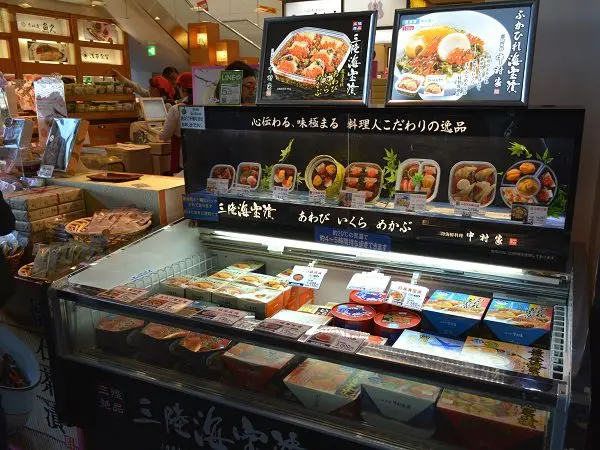
Japanese supermarkets solved this with food replicas — silicone reproductions of the finished dish placed directly in the merchandising zone. The logic is plain: if the package cannot show what is inside, put the thing itself beside it, permanently.
A useful worked example comes from Life Corporation, a chain of roughly 280 supermarkets across the Kansai and Kanto regions, which introduced replicas in part of its estate to merchandise frozen meal kits. Two details from that project are worth borrowing.
First, the replicas were built life-size. A shopper at the cabinet sees the true size of the portion and what the dish looks like once it is out of the box and spread across a plate — which is the state they will actually eat it in. A photograph on the pack cannot do that, because a photograph has no size.
Second, the feedback from the floor was not about decoration. Staff reported that the package photo simply did not register at a glance, while a three-dimensional replica communicated portion size and product quality in a way a flat image could not — and that the aisle itself became easier to notice.
That is the mechanism. Not prettier shelving. A shopper who can finally see what they are buying.
Frozen Food Display Ideas That Work in a Real Aisle
Six placements that require no daily labour.
Use the space above the load line. Open horizontal freezers carry a marked load limit — cooling holds below that line and stops above it, so the product can never be stacked higher. That leaves a strip of permanently empty vertical space in every open case in the store. It is the single most under-used display position in the frozen department, and a replica sitting there is visible from down the aisle. Silicone tolerates the cold without clouding, cracking or losing colour.
Work the top and sides of reach-in doors. Glass doors put product at every height but expose none of it. A replica mounted at eye level beside the handle gives the shopper a reason to open the door in the first place.
Show the meal, not the packet. The replica should reproduce the dish as it ends up on the plate at home — plated, garnished, on real tableware. The pack is already on the shelf; duplicating it in silicone adds nothing.
Build it life-size. The food is always reproduced one to one. A shrunken dish reads as a toy and undoes the whole point of showing volume — the shopper is trying to work out whether this feeds two people or four, and only a full-size replica answers that. How price tags and signs sit inside a display is part of the same design decision, not an afterthought. A replica that quietly oversells the portion will be discovered at the first reheat, and that customer does not come back to the category, let alone the brand.
Cross-merchandise with what completes the dish. A replica of the finished meal placed where the sauce, the side or the garnish sits turns two separate SKUs into one basket. This is the same principle behind butcher shop displays, where the cooked result is shown next to the raw cut.
Rotate seasonally. A cabinet that looks identical in February and August teaches regular shoppers to stop seeing it. Swapping two or three replicas restores attention for a fraction of the cost of a new promotion. Our food display gallery shows how far this can be taken.
HoReCa Expos: Standing Out When Every Stand Sells Frozen
The second environment where this matters is the trade show, and the problem there is sharper. A wholesale buyer walks a hall containing dozens of suppliers with comparable products, comparable claims and comparable margins. Decisions get made in the minutes between stands.
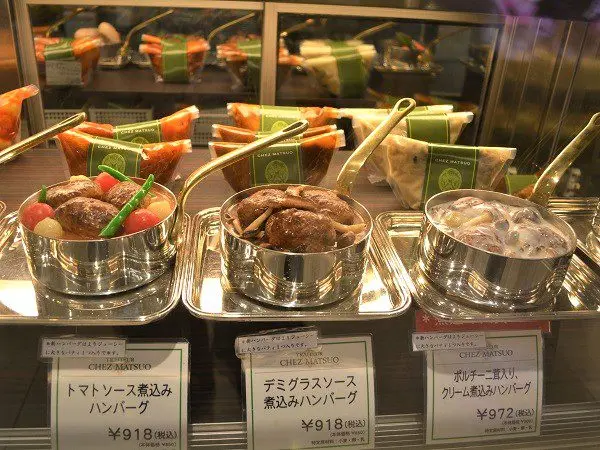
A stand showing only packaging asks the buyer to imagine the result. A stand showing the plated dish removes the imagining. Portion size, plating, garnish, colour after cooking — all answered before a word is spoken, which means the conversation starts at terms and volumes rather than at “so what does it actually look like.”
There is a practical advantage too. Replicas ship in a case, survive the whole show and the next one, and never need refrigeration on the stand. A cooked display needs a kitchen, a schedule and a person watching it.

What It Costs and How Long It Lasts
Replicas are a fixed cost against a recurring one. A demo programme bills every time it runs; a replica is bought once and works every trading hour after that.
Japanese silicone is built for this. It holds shape and colour from -50°C to +100°C, which covers both the freezer cabinet and a hot expo hall, and stays presentable for over fifteen years without fading in sunlight. Individual replicas typically fall between USD 160 and 220, depending on the complexity of the dish — full food replica pricing depends on the order.
Run it against your own demo budget for one year. For most suppliers the comparison is not close.
Show What You Are Selling
The frozen category does not lose to fresh on quality, price or convenience. It loses on visibility, in a cabinet designed to hide the product from the person deciding whether to buy it.
Frozen food merchandising is the correction. Put the finished dish where the shopper is already standing, keep it there permanently, and stop paying for the same demonstration twice.
Nippon Dom has produced silicone food replicas in Tokyo for more than fifteen years, working from photographs of your actual products. Send us the pack and the dish it makes, and we will quote the set.


Related Posts
