
Most restaurant owners notice the same pattern eventually: the dining room fills with couples and solo guests, but families are rare, and the average check refuses to grow. The cause is rarely the food — it’s the absence of a single menu page. This is why restaurants need a kids menu, and why one of the strongest levers in the search for how to attract families to restaurant tables is a decision Japan has been quietly perfecting for 95 years.
Краткая история — как Япония изобрела детское меню в 1930 году
The concept of a dedicated children’s menu was invented in Tokyo in 1930. During the depths of the Great Depression, staff at the Mitsukoshi department store in Nihonbashi created a small one-plate meal for kids — the reasoning was simple: even in hard times, children deserved a little joy from eating out. Three months later, the rival Matsuzakaya store in Ueno launched a similar dish under the name okosama lunch, и именно это название закрепилось. Почти столетие спустя все крупнейшие японские семейные сети — Saizeriya, Gusto, Joyfull, Royal Host — по-прежнему строят выходной трафик вокруг того же формата: одна тарелка-«пластинка», несколько мини-порций, бумажный флажок сверху, игрушка в подарок.

Экономика маркетинга семейного ресторана
Japanese restaurant operators are unusually candid about this: the children’s plate itself is often unprofitable at the unit level. Margins on small portions, custom plating, and a free toy or flag don’t compete with adult mains. But the unit isn’t the plate — the unit is the table. One child arrives with two to four paying adults: parents, sometimes a grandparent or two. The average check of a family table reliably exceeds that of a two-adult table, especially at lunch and on weekends.
The correct way to read a kids menu line on the P&L is therefore not as a product but as a gatekeeper. It’s the ticket that lets an entire family walk in. Japanese chains price children’s sets between 500 and 900 yen on purpose — low enough to never become the reason a family hesitates, low enough that grandparents add it without thinking. Family friendly restaurant marketing isn’t about marketing the kids menu. It’s about marketing the family table, with the kids menu as its entry point.

Что говорят свежие данные о выборе ресторана семьями
Отраслевые исследования 2024–2026 годов подтверждают то, что японские операторы наблюдают десятилетиями. Национальное исследование Affinity Group (2024) показало: 74% американских семей едят в ресторанах чаще, чем годом ранее. Datassential сообщает: 22% семей называют детское меню главным фактором при выборе ресторана — против только 4%, для которых главное взрослое меню. Японский опрос Honichi Lab (апрель 2026) выявил: большинство родителей теперь проверяют ресторан в Google Maps до визита, ища именно фото детских блюд и сигналы, что заведение принимает детей.
The numbers point to three structural shifts. First, families almost never walk in blind — they pre-research, which means an invisible kids menu loses the table in the search results, not at the door. Second, Mintel’s 2025 family dining report shows that 73% of parents now allow their children to lead the restaurant decision. The choice has effectively migrated from the adult to the child. Third, millennial parents expect more than chicken nuggets — 29% actively look for healthier kids meals, and 44% say they would visit restaurants more often if children’s menus were better. This is why restaurants need a kids menu that takes itself seriously, not one assembled from leftovers of the adult kitchen.
Семь причин ввести детское меню
Ниже — семь причин, которые чаще всего называют операторы японских семейных ресторанов и всё активнее повторяют западные консультанты. Это структурные аргументы за то, чтобы относиться к детскому меню как к ключевому предложению ресторана, а не как к маркетинговой надстройке.
Больше гостей за одним столом
A single child rarely arrives alone. The standard family unit is a child plus two adults; with grandparents involved, it becomes four or five. A restaurant that converts solo-and-couple traffic into family traffic doesn’t just sell more covers — it sells bigger ones. The same square meter of floor space generates more revenue per turn, and weekend lunch shifts in particular tilt sharply in favor of operators who welcome families.
Повторные визиты решают дети, а не взрослые
One of the strongest patterns in family dining is that children, not adults, decide where to go back. A kid who enjoyed the flag on the rice, the train-shaped plate, or the small toy at the end will ask to return — and parents oblige. This shifts the repeat-visit decision from rational comparison (“which place had better risotto”) to emotional pull (“the kids want it”), and emotional loyalty is far harder for competitors to break than a price promotion.
Семьи приходят «изученными»
Families don’t roll the dice on an unknown restaurant with children in tow. They check the venue on Google Maps, Tabelog, or Instagram first, and the questions they ask are specific: is there a kids menu, what does it look like, are there high chairs, does the photo gallery show families. A venue without visible kids meals is filtered out before the parent ever opens the front door. Strong visual evidence works — see нашу галерею витрин с детским меню , где видно, как детское меню на уровне витрины превращается в инструмент принятия решения ещё до того, как семья села за стол.
Родители покупают только одно — спокойный обед
The product a parent actually buys in a restaurant is not food. It’s twenty calm minutes. If the child is engaged — by a colourful plate, a flag, a coloring sheet, or a small toy — the parents relax, stay longer, order dessert, and add a coffee. If the child is bored or upset, the meal is cut short and never repeated. The kids menu is the single most efficient tool a restaurant has to extend dwell time and protect the adult check.

Маркировка аллергенов как конкурентное преимущество
Allergen labelling on every children’s dish has shifted from a nice-to-have to a baseline expectation. Eggs, milk, wheat, buckwheat, shrimp, nuts — parents scan for these before they order, and absence of information means the family walks. Going one step further — offering flexible ingredient swaps for allergic children — is one of the most frequently cited reasons families return to a particular venue in Japanese restaurant case studies. The bar has moved: silence on allergens now reads as carelessness.
Детское меню = встроенный канал «сарафана»
Брендированная игрушка, наклейка или маленький флажок едет с ребёнком домой и продолжает рекламировать ресторан в гостиной семьи и в детском саду на следующее утро. Дети показывают друзьям, родители упоминают заведение другим родителям у выхода из школы. Это один из самых дешёвых и устойчивых каналов сарафанного маркетинга во всём ресторанном арсенале, и в пересчёте на одного ребёнка он обходится дешевле бумажной листовки.
Эффект «именинной тарелки»
Families actively choose restaurants that offer a small birthday gesture — a candle, a free dessert, a name written in chocolate on the plate. One children’s birthday means a table of six to ten guests, not three. A satisfied birthday family then books the next year’s celebration at the same venue, often upgrading to a group reservation. The kids menu is the entry point; the birthday plate is the multiplier.
Как привлечь семьи в ресторан — за пределами самого меню
A kids menu only works in combination with the room around it. The question of how to attract families to restaurant tables is not answered by one menu page — it’s answered by the whole guest experience. The working configuration includes four to six core dishes children actually eat (small portions of chicken, pasta, mini-burger, rice with egg, breaded shrimp, French fries), one or two desserts (ice cream, jelly, mini pancake), visible allergen labels on every item, a stated age range (typically three to six years), something to occupy the wait (coloring sheet, crayons, a small toy), basic infrastructure (high chair, stroller space, permission to bring baby food for infants), and a price low enough that no parent hesitates.
And, separately, the visual side. A sectioned plate, a paper flag, a plate shaped like a vehicle or animal that the child recognizes from across the table. This isn’t decoration — it’s the ordering mechanism itself. A four-year-old does not read a menu. A four-year-old points. We cover the dish and plating side in more depth in our guide to идеи оформления детского меню. Но даже самое хорошо собранное детское меню работает только тогда, когда семьи могут его увидеть до того, как сели за стол.
The Counter-Argument — Why Some Studies Say a Kids Menu Isn’t Essential
Одно наблюдение заслуживает честного упоминания. Исследование Affinity Group 2024 года сообщает: только 41% семей считают детское меню обязательным — многие родители говорят, что справятся с разнообразным взрослым меню. На первый взгляд это противоречит всему сказанному выше. На практике это означает кое-что более конкретное: ресторан без детского меню терпим для семей, но не привлекателен для них. Эти 41% не выбирают заведение за its adult variety — they’re settling for it. The moment a competitor with a real kids menu appears nearby, the switch happens fast. Missing a kids menu isn’t a blocker. It’s a vulnerability. The restaurant that wins isn’t the one that convinces parents to cope without a kids menu — it’s the one that removes the question.
Недостающий элемент — видимость до заказа
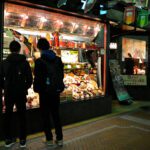
Один элемент остаётся слабым звеном даже в ресторанах с хорошо проработанным детским меню — видимость до того, как заказ сделан. Япония решила эту задачу шестьдесят лет назад. Пройдите мимо любого семейного ресторана в Токио — и вы увидите одно и то же: детское меню выставлено в витрине в виде силиконового муляжа в натуральную величину, сделанного так реалистично, что он не отличается от настоящего блюда. Ребёнок останавливается на улице, показывает пальцем — и заказ, по сути, уже сделан до того, как семья села за стол. Никаких переговоров с меню, никакого десятиминутного спора, что выбрать, никакого испорченного настроения у родителей и детей.
Витрина решает сразу три задачи. Ребёнок выбирает сам, без чтения. Родители избавлены от самой утомительной части обеда. И семьи притягиваются прямо с улицы — даже до того, как они открыли Google Maps, — конвертируя тот самый пассивный пешеходный трафик, который каждый день проходит мимо большинства ресторанов. Для ресторанов за пределами Японии это самый чистый способ перенести японский «семейный плейбук»: создать настоящее детское меню — и показать его так, чтобы прохожие не могли пройти мимо. Тот же принцип, применённый к полному ресторанному заказу — включая две порции детского меню — можно увидеть в нашем кейсе муляжей традиционной японской кухни.
Заключение
A kids menu is not a kind gesture toward families — it’s a structural decision that changes the composition of who sits in the dining room, how long they stay, how often they return, and how the venue spreads by word of mouth. Ninety-five years of Japanese practice and recent Western data converge on the same conclusion: restaurants that take children seriously win the family segment, and the family segment becomes the most loyal, most pre-researched, most word-of-mouth-active customer base a restaurant can build. Any venue without a visible kids menu today is quietly handing that segment to the restaurant across the street.
Покажите детское меню так, чтобы его нельзя было пройти мимо
Nippon Dom создаёт реалистичные муляжи блюд в Токио для ресторанов по всему миру. Покажите детское меню так, как это делают японские семейные рестораны — в витрине, в натуральную величину, до мельчайших деталей. Узнайте стоимость муляжей детского меню или отправьте нам своё меню для индивидуального расчёта.
Кнопка: Заказать муляжи детского меню → /contact/

Похожие посты

Как витрина ресторана в аэропорту помогает привлекать клиентов и снижать языковой барьер
